
Why Are My Gutters Overflowing in Heavy Rain?
Your gutters overflow in heavy rain when water reaches them faster than the system can carry it away, often because debris, a blocked downspout, poor slope, or damage restricts flow. Check from the ground; use gutter repair service for a damaged or misaligned section.
Need help now? (240) 734-2914
Why Are My Gutters Overflowing When Rain Is Heavy?
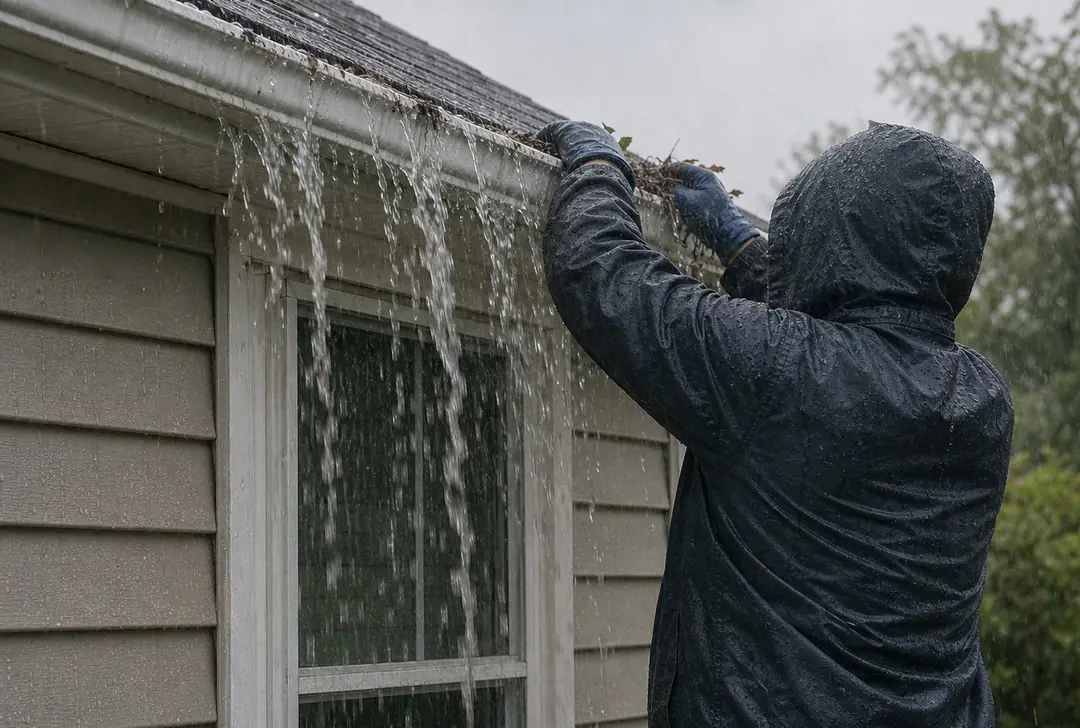
Heavy rain can send water into a gutter faster than it can drain. If leaves, roof grit, or other debris narrow the channel—or a downspout is blocked—the water backs up and spills over the edge. A clog can affect one part of the gutter while the rest continues to drain.
Overflow can also point to a gutter that has pulled loose, a low spot where water collects, a leaking joint, or a drainage path that cannot move water away efficiently. Where water spills matters: overflow along a long stretch suggests a different problem than water pooling at one corner or spilling only near a downspout.
Watch from the ground during rain if you can do so safely. Note where the water spills, whether it starts soon after rain begins, and whether the downspout outlet is sending water away.
What the Overflow Pattern Can Tell You About Your Gutters
The location and timing of overflow can help narrow down the cause. These signs are clues, not a reason to climb up and inspect the gutter yourself.
- Water spills over one short section — A local blockage or low spot may be holding water at that point. Note whether it is close to a corner, seam, or downspout.
- Water spills near the downspout — Debris in the gutter or a blocked downspout may be slowing the exit. Look from the ground to see whether water comes out of the outlet.
- Water runs behind the gutter — The gutter may have pulled away or water may be getting past the back edge. Look for a damp band or staining on the fascia or siding after the rain.
- The gutter sags or appears uneven — A loose support or changed slope can leave water sitting in the run. Compare the line of the gutter from the ground and note any visible dip.
- Water spills along much of the run — A widespread clog or a drainage system that cannot keep up may be involved. Record whether the overflow happens only in especially heavy rain or during ordinary showers too.
How to Check Gutter Overflow Safely From the Ground
Use these owner-level checks to describe the problem clearly. Do not climb onto the roof, lean out of a window, or reach into the gutter or downspout.
- Watch the gutter during rain from a safe spot — Notice where water first crosses the edge and whether it happens at one point or across a long section. That location helps distinguish a local obstruction from a broader drainage issue.
- Look for a visible dip in the gutter line — From the ground, compare the gutter’s line with nearby roof edges. A sag can signal that water is not moving toward the outlet; note its position for the repair estimate.
- Check the downspout outlet without touching it — Look for water flowing out while it rains and for visible debris around the opening. A dry outlet during active overflow can indicate that water is not getting through.
- Check the ground beneath the roof edge — Look for splash marks, washed-out soil, or puddles directly below the gutter. Those signs show where runoff is landing, not necessarily which part is blocked.
- Look for water marks on the wall — After the rain, check from the ground for damp-looking streaks or staining below the gutter. Water behind the gutter can point to a loose edge or a problem at the fascia.
- Check for indoor signs without opening anything — Look at ceilings and walls near the roofline for fresh damp patches or discoloration. If you see indoor water, protect belongings and arrange an assessment rather than waiting for another storm.
- Write down the pattern and timing — Record the location, how long it rains before overflow starts, and whether the downspout outlet flows. These details help identify whether cleaning, repair, or a drainage check is the next step.
Need help now? (240) 734-2914
Which Gutter Fix Fits the Overflow You See?
Match the next step to the strongest clue. A single symptom may have more than one cause, so avoid treating a visible drip as proof that the gutter itself needs replacement.
Choose cleaning for a likely blockage
Leaves or debris in the gutter or downspout can restrict flow. Gutter cleaning is the relevant service when buildup is the likely cause; see gutter cleaning in Silver Spring.
Choose repair for a loose, leaking, or uneven section
A sag, separated joint, or section pulling away points toward a physical gutter problem. A gutter repair service addresses damage rather than just removing debris.
Ask about drainage when water cannot exit
If the gutter looks clear but water still backs up near the outlet, the downspout or its drainage path may be involved. Share what you observed so the estimate can focus on the full route water needs to take.
Get an assessment for widespread overflow
Overflow across a long run, especially when it happens without an obvious clog, calls for checking the gutter’s condition and water flow. Avoid adding a guard or changing the system before the underlying cause is understood.
What Can Happen If Overflow Keeps Reaching the House?
Repeated overflow can soak the ground beside the foundation, stain siding, and expose fascia or other nearby materials to ongoing moisture. Water landing in one spot can also wash away soil or leave puddles where you do not want them.
A small drip does not tell you whether the cause is a clogged channel, a leaking seam, or a gutter that has shifted. Treating only the visible drip can leave the restriction or drainage problem in place, so record the overflow location and check again after the next rain if it is safe to observe.
Water entering the home or a gutter visibly pulling away calls for prompt attention. For a failed or badly damaged section, see emergency gutter repair in Maryland: what to do when a gutter fails.
When Overflow Calls for Cleaning Instead of Gutter Repair
Cleaning removes debris that blocks water from moving through the gutter and downspout. Repair addresses damage or alignment problems, such as a loose section, a leaking joint, or a visible sag. When both debris and damage are present, clearing the blockage alone may not stop the overflow.
Maryland Gutter Service offers gutter cleaning from $80 and gutter repair from $175. A free estimate helps identify which service fits the visible problem; the starting price is not a substitute for assessing the specific work.
A gutter-repair visit’s length depends on the cause and how much of the system needs attention. Describe where the water spills and whether you see a sag, leak, or blocked outlet when you book, so the estimate can address the problem you observed.
Need help now? (240) 734-2914
How to Book a Gutter Overflow Estimate in Maryland
Contact Maryland Gutter Service and share your address, the section that overflows, and what you noticed about the downspout or gutter line. The business is open 7 days a week, 7 am to 10 pm; same-day service is available, and estimates are free.
You can also contact us to request an estimate. Gutter repair starts at $175, and work is covered by a 5-year warranty. The estimate is the time to describe whether the problem appears to be a blockage, leak, loose gutter, or drainage issue.
Frequently asked questions
Can heavy rain make a clear gutter overflow?
Yes. Rain can enter faster than a gutter and downspout can carry it away, especially if the system has a drainage restriction or a low section that holds water. Note whether overflow happens only in heavy rain or also in ordinary showers.
Should I climb up to check whether the gutter is clogged?
No. Observe the gutter and downspout from the ground, and do not reach into them or climb onto the roof. When debris is the likely cause, book gutter cleaning rather than trying to clear it yourself.
How do I know whether overflow needs repair rather than cleaning?
Visible sagging, a loose section, water running behind the gutter, or a leak at a joint points to a repair concern. Debris or a downspout that is not draining points toward cleaning or a drainage check; an estimate can help identify the cause.
What should I do if water is coming inside during a storm?
Move belongings away from the water and note where it is entering, without climbing up to inspect the gutter. Arrange a prompt gutter assessment, especially if the gutter is pulling away or water continues to enter the home.
Get a Free Gutter Repair Estimate
Tell us where the water spills and what you have noticed from the ground. Call (240) 734-2914; we are open 7 days, 7 am to 10 pm, and same-day service is available.