
5-Inch vs. 6-Inch Gutters: Which Does Your House Need?
For many homes, 5-inch gutters work well with a straightforward roof, while 6-inch gutters suit larger or steeper roof sections that send more water to the eaves. The right size depends on roof area, pitch, gutter layout, and downspouts working together.
Need help now? (240) 734-2914
5-Inch vs. 6-Inch Gutters: Which Size Fits Your Roof?
Gutter size is about how much water the system can collect and move, not simply how large the house looks from the street. A broad roof can drain into one side, several valleys can concentrate runoff at a corner, and a steep roof can deliver water quickly to the gutter. Those details matter as much as the home’s floor area.
A 5-inch gutter is often a practical fit for a modest roof section with a simple shape and suitable downspouts. A 6-inch gutter gives more room for water when roof sections are large, steep, or arranged to funnel runoff into a limited number of gutter runs. Neither size can compensate for a poor slope, a blocked outlet, or an undersized downspout.
5-inch gutters
Consider this size when the roof area feeding each run is limited and water reaches the gutter evenly. Check for past overflow before keeping the same size during a replacement.
6-inch gutters
Consider this size when a roof section collects substantial runoff or several roof planes converge above one run. Make sure the downspouts can carry away the added flow.
A system-sized choice
The gutter, slope, outlets, and downspouts function as one drainage path. A larger gutter paired with a restrictive outlet may still spill water during heavy flow.
Signs Your Current Gutter Size May Not Match the Roof
Look for repeatable signs during or just after rain, from a safe position on the ground. One splash or spill does not prove the gutter is too small: debris, a loose section, poor slope, or a blocked downspout can create similar symptoms.
- Water spills over the front edge — Note where it happens and whether it occurs across a long run or at one concentrated spot. A full-length overflow may point to capacity; overflow near a corner can point to a layout or outlet issue.
- A roof valley sends water to one short section — A concentrated stream can overwhelm a section that handles ordinary roof runoff elsewhere. Record which valley and gutter area are involved so the sizing review focuses on that location.
- Runoff appears around the foundation — Check whether a downspout is discharging beside the house or whether water is escaping before it reaches the outlet. The source needs to be identified before choosing a larger gutter.
- The gutter overflows after cleaning — When debris is no longer blocking the path but overflow continues, ask for the pitch, outlet, downspout, and gutter capacity to be checked together.
Roof Area, Pitch, and Runoff Decide Between 5 and 6 Inches
Start with the roof area that drains into each gutter run, rather than the home’s total square footage. A 2,000-square-foot house can have a simple roof with runoff spread across several sides, or a more complicated roof that directs several sections toward a few eaves. The same house size does not automatically call for the same gutter size.
Roof pitch changes how quickly water reaches the eaves. Roof valleys and intersecting planes can also concentrate flow, so a short section may need a different solution from a long, evenly fed run. The installer should note where each roof section drains and where runoff becomes concentrated.
The discharge path matters just as much. Downspouts must be placed and sized to move water out of the gutter; bends, long runs, or a restricted outlet can limit drainage. A 6-inch gutter may provide extra capacity, but it will not solve a clogged or poorly arranged downspout.
Need help now? (240) 734-2914
How to Check Gutter Size Before Replacing It
You can collect useful observations from the ground without climbing onto the roof or reaching into a gutter. Leave close inspection, measuring at height, and installation work to a gutter professional.
- Map the roof sections — From the ground, sketch the roof edges and mark the gutter runs. Note which roof planes appear to drain toward each run; check that the sketch includes every side with gutters.
- Mark valleys and concentrated flow — Add roof valleys and places where roof sections meet above a gutter. Check whether those points send runoff toward a short area rather than spreading it along the full run.
- Look for overflow patterns — After rain, observe from a safe location where water spills, drips, or bypasses the gutter. Check whether the pattern repeats in the same place during separate rain events.
- Note the gutter profile from below — Use binoculars or a camera zoom to compare visible gutter depth and shape without climbing. Check whether sections appear bent, sagging, or separated, since damage can mimic a sizing problem.
- Trace the outlet locations — Follow each visible gutter run to its outlet and downspout. Check whether every run has a clear drainage route and note any downspout that appears disconnected or obstructed.
- Inspect the ground discharge — Look at where the downspouts release water and whether splash marks or erosion appear nearby. Check that water is not simply escaping at the outlet before it reaches the ground.
- Compare observations with the existing size — Share your roof sketch, overflow locations, and visible issues during a sizing review. Ask the installer to verify the roof area feeding each run, gutter pitch, outlet placement, and downspout capacity.
Why a 6-Inch Gutter Can Still Overflow
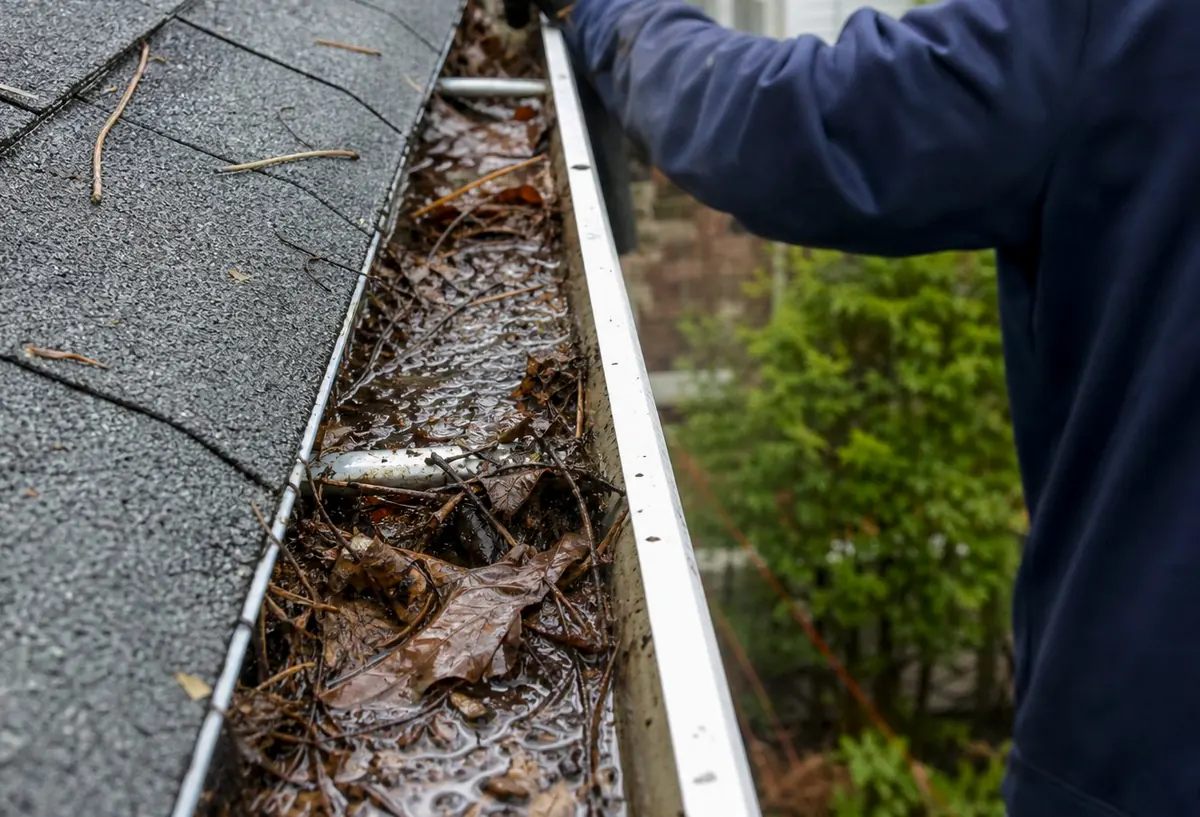
More gutter capacity helps only when water can enter, travel through, and leave the system. Leaves or other debris can block the channel; an outlet can restrict flow; and an incorrect slope can leave water standing instead of moving toward the downspout. Check those causes before assuming the gutter size is the problem.
A poor fit at the roof edge can also send water behind the gutter, while loose hangers or damaged fascia can affect how the run sits. A larger replacement should not cover up a mounting or drainage issue. Ask for the cause of the overflow to be identified before settling on a size.
If water spills because the gutter is packed with debris, do not climb up to clear it. Arrange gutter cleaning in Silver Spring and have the flow checked afterward. If overflow remains once the path is clear, a sizing and drainage assessment can distinguish capacity from a system defect.
Match the Gutter Size to Outlets and Downspouts
Before choosing a wider gutter, compare the parts that carry water away from the roof. This check helps prevent replacing a visible component while leaving the actual restriction in place.
- Gutter slope — The run should guide water toward its outlet instead of allowing it to pool. Ask the installer to check the slope across the full section, especially where overflow or standing water has appeared.
- Outlets — An outlet needs to pass water from the gutter into the downspout. Check whether its opening and location suit the gutter run and whether debris or a poor connection narrows the path.
- Downspouts — A downspout carries water away from the gutter, so a larger channel alone may not improve drainage if the downspout is restricted. Have the complete route and discharge point reviewed.
- Mounting and roof edge — The gutter should sit securely and catch runoff from the roof edge. Ask for the fascia and mounting condition to be checked before new gutters are attached.
Need help now? (240) 734-2914
Get a Gutter Installation Review Based on Your Roof
A useful sizing assessment identifies the roof sections feeding each run, notes concentrated flow, and checks the gutter slope, outlets, downspouts, and mounting surface. The on-site review should also establish the amount of gutter involved and whether existing components can remain. Installation time depends on the measured scope, roof layout, and any repairs needed at the fascia.
Share your overflow observations and roof sketch when booking so the visit can focus on the areas that concern you. Maryland Gutter Service provides gutter installation service, with installation starting at $7 per linear foot. For more on the price factors, see how much gutter installation costs in Maryland.
We serve Silver Spring and towns across Maryland, and same-day service is available. To arrange a sizing review, contact us with your address, the gutter sections in question, and what you have noticed during rain.
Frequently asked questions
What size gutters does a 2,000-square-foot house need?
Floor area alone does not determine gutter size. The roof area draining into each run, roof pitch, valleys, and downspout layout all affect whether 5-inch or 6-inch gutters fit; have those parts assessed together.
Can 5-inch gutters work on a steep roof?
They can, but the roof’s pitch and the area feeding each gutter run matter. Steep sections can send water to the eaves quickly, so check for concentrated flow and repeat overflow before choosing a size.
Should I replace 5-inch gutters with 6-inch gutters?
Consider 6-inch gutters when the roof area or layout overwhelms the existing system, but first check for clogs, poor slope, restricted outlets, and downspout problems. Replacing the gutter without correcting those issues can leave the same drainage problem.
How much does gutter installation cost?
Gutter installation starts at $7 per linear foot. The total depends on the amount of gutter and the work needed for your roof and drainage layout; an estimate can account for the measured scope.
Choose the Gutter Size Your Roof Can Drain
Share where water overflows and which roof sections feed the gutter. We can assess the sizing and drainage needs for your installation.